
Arrests.org AR – Arkansas Arrest, Inmate & Mugshot Records
Arrests.org AR serves as a digital entry point for people wanting to view Arkansas jail logs and mugshots. This site aggregates data from local law enforcement agencies to display recent detention information. People use Arrests.org AR to see who police took into custody, check charges, or look up friends and family members. While this third-party site collects data, official government portals often hold the original and most current files. Arkansas law makes these documents public, allowing citizens to view them freely.
You can view the main search form interface below:
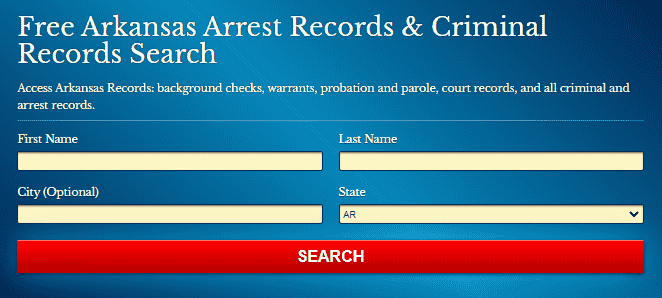
The state of Arkansas provides open paths to view these files. The Freedom of Information Act (FOIA) supports this transparency. This law states that the public owns the data held by the government. Because of this, you can see arrest logs, court dockets, and inmate rosters. Third-party sites like Arrests.org AR grab this public data and put it in one place. Official county sheriff sites also publish this data, often with real-time updates.
Arkansas Freedom of Information Act and Public Rights
The Arkansas Freedom of Information Act (FOIA) stands as one of the strongest open-record laws in the United States. This law gives you the right to inspect and copy public documents. This includes police reports, jail booking logs, and court filings. The law presumes all records are open unless a specific statute closes them.
You do not need a special reason to ask for these records. You do not need to be a lawyer or a journalist. Any citizen can ask to see them. This transparency helps keep government agencies honest. It lets the public see how law enforcement works.
Records Open to the Public
Under Arkansas law, you can view many types of documents. These include:
- Jail Booking Logs: Lists of people currently in county detention centers.
- Police Reports: Initial accounts of incidents written by officers (some details may be blacked out).
- Court Dockets: Schedules of upcoming trials and hearings.
- Sentencing Orders: Final decisions made by a judge regarding a crime.
- Sex Offender Registry: Locations and details of convicted sex offenders.
- Warrant Lists: Active orders for arrest issued by a judge.
Records Closed to the Public
The law protects certain sensitive files. You cannot view everything. The state keeps these items private to protect safety and privacy:
- Juvenile Records: Files regarding anyone under 18 years old.
- Sealed or Expunged Files: Records that a judge ordered removed from public view.
- Medical Records: Health information of inmates or victims.
- Ongoing Investigation Files: Data that could ruin a current police case if released too soon.
- Grand Jury Minutes: Notes from closed grand jury proceedings.
Official Sources vs. Third-Party Aggregators
You have two main choices when looking for data: official government sites or third-party aggregators like Arrests.org AR. Each option works differently.
How Third-Party Sites Work
Sites like Arrests.org AR use software to scan government websites. This software copies names, photos, and charges. It then posts this data on a central website. This makes searching easy because you can look across many counties at once. You do not need to know exactly where an arrest happened.
A downside exists. Sometimes the software misses an update. If a judge dismisses a case, the official court site updates immediately. The third-party site might not update for weeks or months. This means you might see a mugshot for a person who is effectively innocent or free. Always check the date of the record.
How Official Government Sites Work
County sheriffs and state courts run official sites. These are the primary sources. When a deputy books someone into jail, they type the data into the jail management system. This system feeds the online roster directly. This data is the most accurate you can get.
If you see a record on an official sheriff’s site, the person is likely in custody right now. If the person bonds out, the official site removes them from the “current inmate” list quickly. Using official sites ensures you have the correct status.
Search Arkansas Inmate Rosters by County
Arkansas has 75 counties. Each county has a Sheriff who manages the local jail. Most arrests start here. To find someone, you usually need to check the specific county roster.
Pulaski County Inmate Search
Pulaski County includes Little Rock, the state capital. It has the largest jail population. The Pulaski County Sheriff’s Office maintains an online roster. You can search by name. The results show the booking photo, the charges, and the bond amount. The system updates frequently throughout the day.
To use this tool, go to the Sheriff’s official page. Look for the “Inmate Search” or “Jail Roster” link. Type the last name of the person. If you are unsure of the spelling, try typing just the first few letters. The system will show all matches.
Washington County Detention Center Lookup
Washington County holds Fayetteville and Springdale. The Sheriff’s Office here provides a detailed inmate roster. This list often includes the intake date and the scheduled court date. You can see if a person is waiting for trial or serving a short sentence.
The search tool allows you to filter by booking date. This helps if you want to see who the police arrested in the last 24 hours. The entries usually list the specific Arkansas statute code for each charge.
Benton County Jail Roster
Benton County, home to Bentonville and Rogers, also offers an online search. The Benton County Sheriff’s Office lists current detainees. Their system often displays the agency that made the arrest. This could be the Sheriff’s deputies, local city police, or state troopers.
Knowing the arresting agency helps. If you need a copy of the police report, you must contact the agency that made the arrest, not the jail. The jail just holds the person. The arresting agency holds the report.
Sebastian County Adult Detention Center
Sebastian County has two districts, Fort Smith and Greenwood. The Adult Detention Center in Fort Smith holds most inmates. Their online lookup provides basic booking details. You can verify if a person is in custody and what their bail is set at.
If you cannot find a person online, call the jail intake desk. Sometimes, a person is in the process of booking. They might not appear on the website for a few hours. Staff can confirm if a person is in the building.
Using the Arkansas State Police ARCH System
For a deeper look into a person’s history, check the Arkansas State Police (ASP). They manage the central database for criminal history. This is different from a local jail roster. A jail roster shows who is in jail now. The ASP database shows a history of convictions over time.
Online Criminal Background Checks
The ASP provides the Arkansas Criminal History (ARCH) system. This tool allows you to request a background check online. This search is not free. You must pay a fee mandated by state law. The search checks for felony and misdemeanor convictions.
To use ARCH, you need the person’s full name and date of birth. You also need their consent in many cases. Employers use this system to screen job applicants. Landlords use it to screen tenants. The report you get comes directly from the state repository.
Fingerprint-Based Searches
A name-based search can sometimes be wrong if two people have the same name. A fingerprint search is exact. The ASP offers fingerprint-based checks for specific purposes. This usually applies to teachers, nurses, and security guards. You must go to a police station or a designated site to get fingerprints taken.
Arkansas Court Records via CourtConnect
Arrest records only tell the start of the story. Court records tell the end. To see what happened after an arrest, use the Arkansas Judiciary website. They offer a tool called Court Connect.
What CourtConnect Shows
CourtConnect links to the internal case management system of the courts. You can see:
- Filings: Every document lawyers filed in the case.
- Orders: Every decision the judge signed.
- Schedule: Future court dates and times.
- Parties: Names of the attorneys and the judge.
- Disposition: The final outcome (Guilty, Not Guilty, Dismissed).
How to Search CourtConnect
Go to the Arkansas Judiciary homepage. Click on CourtConnect. You can search by the person’s name or the business name. You can also search by the specific Case ID if you have it. Select “Public Court Information.”
The results list every case associated with that name. This includes criminal cases, civil lawsuits, traffic tickets, and divorces. Click on a case number to see the docket. The docket is a timeline of events in the case. This is the best way to verify if a person has a conviction.
Checking for Active Warrants
A warrant is a judge’s order to arrest someone. Warrants are public records. You can check for them to see if you or someone else is wanted by the police.
Local Warrant Searches
Many Sheriff’s Offices post a list of active warrants on their websites. This list usually shows the person’s name, the charge, and the last known address. If you see your name on a warrant list, contact a lawyer or the court immediately. Ignoring a warrant leads to an arrest during a traffic stop or at your home.
Statewide Warrant Status
No single public website lists every warrant in Arkansas. You must check county by county. However, the CourtConnect system often shows if a judge issued a “Failure to Appear” warrant in a specific case. Look at the docket entries for the words “Bench Warrant Issued.”
Arkansas Sex Offender Registry
The Arkansas Crime Information Center (ACIC) maintains the Sex Offender Registry. This tool tracks people convicted of sex crimes. The law requires these individuals to register their address with local police.
Searching the Registry
You can search the registry online for free. You can look up a specific name to see if a person is registered. You can also search by geography. Enter your address or zip code to see registered offenders living near you. The map view shows pins at the locations of offenders.
Offender Levels
Arkansas assigns levels to offenders based on risk. The public can see details for higher-risk levels.
* Level 1: Low risk. Often not published on the public website.
* Level 2: Moderate risk. Available online.
* Level 3: High risk. Available online.
* Level 4: Sexually Violent Predator. Available online with extra details.
The profile includes the person’s photo, physical description, address, and the crime they committed. It does not allow you to harass or threaten the individual. Misusing this data is a crime.
Vital Records: Birth, Death, and Marriage
Vital records differ from criminal records. These documents record life events. The Arkansas Department of Health (ADH) manages these files.
Birth and Death Certificates
Birth and death records are not open to the general public immediately. Arkansas keeps birth certificates private for 100 years. Death certificates stay private for 50 years. Only family members or legal representatives can order them during this restricted time.
To get a copy, you must prove your relationship. You need to show an ID and fill out a request form. You can order online through the ADH website or a partner service like VitalChek. You can also visit the ADH office in Little Rock.
Marriage and Divorce Records
Marriage coupons and divorce coupons are available from the ADH. The actual marriage license comes from the County Clerk where the couple married. The divorce decree comes from the Circuit Clerk, where the judge granted the divorce.
Marriage and divorce records are generally public. Anyone can search for them to verify a marriage. CourtConnect often shows divorce cases. You can see the date the divorce was finalized.
Arrest Data vs. Criminal History
People often confuse arrest logs with criminal history. They are not the same. Knowing the difference prevents misunderstandings.
The Arrest Log
An arrest log captures a single moment. It shows that the police believed a crime happened. It shows they took a person to jail. It is an accusation. It is not proof. A person on an arrest log might be innocent. The prosecutor might drop the charges the next day. The log will still exist as a record of the event.
The Criminal History
Criminal history focuses on convictions. It shows cases where a person pleaded guilty or a court found them guilty. Background checks for jobs usually look for convictions, not just arrests. The Fair Credit Reporting Act (FCRA) limits how far back a background check can report arrests that did not lead to a conviction (usually seven years). Convictions can stay on the report indefinitely.
Sealing Records in Arkansas
A criminal record makes getting a job or housing hard. Arkansas law allows people to seal their records. This process was formerly called “expungement.” Now the law uses the term “sealing.”
Effect of Sealing
When a court seals a record, the clerk removes it from public view. It disappears from CourtConnect. It disappears from background checks run by private companies. The person can legally say they have no record for that offense. The record still exists physically, but only police and courts can see it.
Who Qualifies
Not everyone qualifies. Misdemeanors are easier to seal than felonies. You usually must complete your sentence and pay all fines. You must wait a certain period, often 60 days for misdemeanors or five years for felonies. Some serious violent crimes and sex offenses cannot be sealed.
The Sealing Process
To seal a record, you must file a petition in the court where you were convicted. You do not always need a lawyer, but it helps. You file the paperwork and pay a filing fee. The prosecutor has a chance to object. If they do not object, the judge signs the order. You must then send this order to the Arkansas Crime Information Center to update the central database.
Inmate Communication and Money
If you find a friend or family member in an Arkansas jail, you might want to contact them. Jails have strict rules for this.
Phone Calls
Inmates cannot receive incoming calls. They can only make outgoing calls. These are usually collect calls or prepaid calls. You must set up an account with the phone provider the jail uses. Common providers include Securus, GTL, or ICSolutions. The inmate calls you, and the system deducts money from your account.
Sending Money
Inmates need money for the commissary. The commissary is a store inside the jail where they buy soap, snacks, and paper. You can deposit money into their account. Most jails have a kiosk in the lobby for cash deposits. You can also deposit money online through the jail’s website. You will need the inmate’s full name and jail ID number.
Mail Rules
You can send letters to inmates. Jails inspect all mail for contraband. Do not send cash, stamps, or Polaroid photos. Some jails now scan mail and show it to inmates on a digital tablet. Check the specific county sheriff’s website for the exact mailing address and rules.
Arkansas Data Privacy Laws
While records are public, privacy laws still apply. You cannot use public records to commit fraud or identity theft. The Driver’s Privacy Protection Act (DPPA) protects personal information on driver’s licenses. You cannot get a person’s driver’s license photo or details without a specific legal reason.
Social Security Numbers are also protected. Court clerks redact (black out) these numbers from public documents. This prevents identity theft while keeping the rest of the file open.
Directory of Major Arkansas County Resources
Use this table to locate the correct agency for the area you are searching.
| County | Major Cities | Resource | Record Type |
|---|---|---|---|
| Pulaski | Little Rock, North Little Rock | Sheriff’s Office | Jail Roster / Warrants |
| Washington | Fayetteville, Springdale | Sheriff’s Office | Inmate Search / Mugshots |
| Benton | Bentonville, Rogers | Sheriff’s Office | Detention List |
| Sebastian | Fort Smith | Adult Detention Center | Booking Log |
| Faulkner | Conway | Sheriff’s Office | Inmate Roster |
| Garland | Hot Springs | Sheriff’s Detention | Arrest Log |
| Craighead | Jonesboro | Sheriff’s Office | Jail Intake |
| Saline | Benton, Bryant | Sheriff’s Office | Current Inmates |
Correcting Errors in Public Records
Mistakes happen. A clerk might type a name wrong. A disposition might not get entered. If you find an error in your record, you must fix it at the source.
Contact the agency that created the record. If the error is on a rap sheet, contact the Arkansas State Police. You might need to provide fingerprints to prove you are not the person listed. If the error is in a court file, contact the Circuit Clerk. You may need to file a motion to correct the record.
Once you fix the official record, you can ask third-party sites to update their data. Send them a copy of the corrected official document. They usually remove or update the false information.
Official Contact Information for Arkansas Records
Arkansas State Police (Headquarters)
One State Police Plaza Drive
Little Rock, AR 72209
Phone: (501) 618-8000
Hours: Monday – Friday, 8:00 AM – 4:30 PM
Arkansas Administrative Office of the Courts
Justice Building
625 Marshall Street
Little Rock, AR 72201
Phone: (501) 682-9400
Arkansas Department of Health (Vital Records)
4815 West Markham Street
Little Rock, AR 72205
Phone: (501) 661-2000
Frequently Asked Questions (FAQ’s)
Here are common questions that help readers learn how Arrests.org AR works, what type of data appears on the site, and how public arrest records in Arkansas are sourced. This section gives brief clarity about data accuracy, site ownership, and record usage so users know what to expect before reviewing individual listings.
Is Arrests.org AR a government website?
No, Arrests.org AR operates as a private, third-party platform. It is not affiliated with the State of Arkansas or any law enforcement agency. The site gathers data from public government sources and organizes it for users. Because it is not an official source, the data might not always reflect the most recent court updates or expungements. For official verification, you should always cross-reference information with the specific county sheriff’s office or the Arkansas Judiciary website.
How much does it cost to look up arrest records in Arkansas?
Most basic searches are free. County sheriff websites typically allow you to view current inmate rosters and booking logs at no cost. The Arkansas Judiciary’s CourtConnect system is also free for searching case files and dockets. However, official background checks through the Arkansas State Police ARCH system require a fee, usually around $24.00 for a name-based search. Requesting certified paper copies of records from a court clerk or police department may also incur small printing and processing fees per page.
Can I remove my mugshot from the internet in Arkansas?
Removing a mugshot from a third-party site can be difficult, but it is possible. Arkansas law prohibits websites from charging a fee to remove a mugshot if the person was acquitted or the charges were dropped. If a website demands payment to remove a photo, it may be violating state law. To get a photo removed, you typically need to provide the website owner with legal documentation showing the case was dismissed, the person was found not guilty, or the record was sealed. You should send this documentation directly to the site’s contact email.
How far back do Arkansas background checks go?
Official criminal history reports from the Arkansas State Police cover the person’s entire adult life. Convictions stay on the record indefinitely unless sealed. However, for employment and housing checks conducted by private consumer reporting agencies, federal law (FCRA) generally limits the reporting of non-conviction arrests to seven years. This means an arrest that happened ten years ago but did not result in a guilty verdict should not appear on a standard tenant or employment screening report, though it remains in the permanent police file.
Why can’t I find a recent arrest on the county roster?
There are several reasons a name might not appear. First, there is a delay between the physical arrest and the data entry at the jail. This booking process can take several hours. Second, the person may have already posted bail and been released. Once released, their name is often moved from the “current inmate” list to a “released” list or removed entirely from the active view. Third, the person might be held in a city jail rather than a county jail, or they may be a juvenile, whose records are not published on public rosters.
Are juvenile records available to the public in Arkansas?
Generally, no. Arkansas law protects the privacy of minors involved in the justice system. Police and courts keep juvenile records confidential. They are not posted on public websites or inmate rosters. Exceptions exist for very serious crimes where a juvenile is charged as an adult. In those specific felony cases, the records become public just like an adult’s record. Otherwise, only parents, guardians, and attorneys can access these files through a direct request to the court.
What is the difference between a bench warrant and an arrest warrant?
An arrest warrant is issued when police present evidence to a judge that a person committed a crime. It authorizes police to find and arrest that person. A bench warrant is issued directly by a judge, usually because a person failed to appear in court for a scheduled hearing or failed to pay a fine. Both types of warrants authorize law enforcement to take the person into custody. You can resolve some bench warrants by contacting the court clerk and setting a new court date, while arrest warrants typically require booking at the jail.